Aftermath photos show patrol car damage after driver crashes into Oklahoma trooper on turnpike
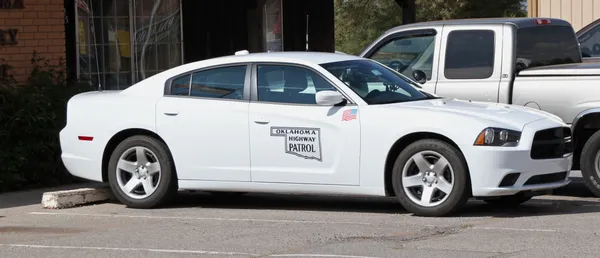
Crash strikes patrol unit during turnpike enforcement activity
Images released after a recent collision on an Oklahoma turnpike show extensive damage to a marked Oklahoma Highway Patrol vehicle after a driver crashed into a trooper’s unit. The photos document the impact to the patrol car and the debris pattern typical of high-energy crashes on limited-access highways, where traffic speeds and short reaction times can turn roadside incidents into secondary collisions.
Details released publicly have focused on the aftermath rather than a full reconstruction of the sequence of events. The incident remains part of a broader pattern of roadside crashes involving emergency vehicles in Oklahoma, where troopers and other first responders routinely work on shoulders or in travel lanes while assisting motorists, conducting stops, or managing prior collisions.
What the images indicate — and what remains unknown
Aftermath photographs can help illustrate the severity of a crash, but they do not, on their own, establish fault or the factors that led to impact. Determining whether distraction, impairment, speed, weather, or visibility contributed typically depends on witness statements, vehicle data, scene measurements, and, in some cases, toxicology results.
In similar Oklahoma incidents documented in recent years, troopers have reported being struck while positioned on the shoulder during traffic stops or while their patrol units were parked with emergency lighting activated. Investigations in those cases have often emphasized the risks created when drivers fail to change lanes away from stopped emergency vehicles or fail to reduce speed when conditions require it.
Law enforcement crash investigations generally evaluate lane position, point of impact, pre-impact braking, and driver condition to determine contributing factors.
Move Over requirements and enforcement context
Oklahoma’s “Move Over” requirements are designed to reduce the danger to officers, tow operators, road crews, and stranded motorists by requiring drivers to change lanes away from stopped emergency or service vehicles when safe to do so, and to slow down when a lane change is not possible. Violations can lead to citations, and more serious penalties may apply when a failure to comply contributes to injury or property damage.
Public-safety officials have repeatedly highlighted that shoulder work is among the most hazardous duties for responders. Even with reflective gear and emergency lights, a momentary lapse by a passing driver can cause a chain reaction—particularly on turnpikes where speed differentials are high and traffic density can change quickly.
What comes next
Crashes involving marked patrol vehicles are typically reviewed through standard investigative steps that may include documenting the scene, collecting evidence, assessing vehicle damage, and compiling statements. If criminal violations are suspected—such as impaired driving or reckless operation—additional procedures may follow before a case is presented for charging decisions.
- Scene documentation and measurements to establish impact dynamics
- Collection of driver statements and witness accounts
- Evaluation of roadway conditions, signage, and visibility
- Review of any available in-car or nearby surveillance video
Officials have not released a complete timeline or final findings in connection with the turnpike crash photos. As with other serious roadside collisions, final determinations generally depend on the conclusion of the investigation and any subsequent court proceedings.