Charles McCall frames gubernatorial bid around executive branch accountability and long-term investment priorities in Oklahoma
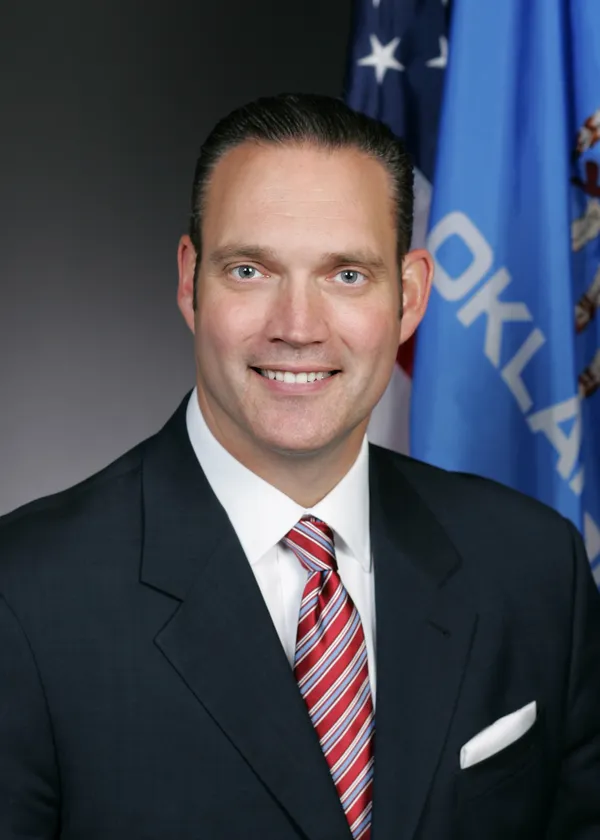
McCall enters 2026 race after eight years leading the House
Former Oklahoma House Speaker Charles McCall, a Republican from Atoka, is running for governor in the 2026 election cycle after reaching legislative term limits in 2024. McCall led the Oklahoma House of Representatives from 2017 through early 2025, a period that included repeated budget negotiations, major tax and education debates, and a renewed push for reorganizing executive authority over state agencies.
The state’s 2026 election calendar sets the Republican primary for June 16, 2026, followed by the general election on Nov. 3, 2026. McCall’s entry places him among several Republican contenders seeking to succeed Gov. Kevin Stitt, who cannot run again because of term limits.
Executive reform: expanding accountability over agencies
McCall’s campaign message has emphasized what he describes as a need for stronger executive management and accountability within state government. Oklahoma’s executive branch structure includes a cabinet system established by the Executive Branch Reform Act of 1986, which organizes agencies into cabinet areas but does not automatically consolidate agency decision-making under cabinet secretaries.
In recent years, Oklahoma lawmakers and the governor have advanced a series of changes aimed at giving the executive branch more direct oversight of certain large agencies. In 2019, Stitt and legislative leaders announced an “agency accountability” package intended to shift hiring and firing authority for agency heads at the Oklahoma Health Care Authority, the Department of Transportation, the Department of Corrections, the Office of Juvenile Affairs, and the Department of Mental Health and Substance Abuse Services.
McCall has pointed to that broader framework as a starting point for additional restructuring, arguing that the governor should be able to drive performance and responsiveness across major parts of state government.
Budget stability and long-range planning
McCall has repeatedly tied executive reform to a second theme: the state’s improved fiscal position. He has described Oklahoma as having moved from short-term budget pressure to a period of larger reserves, and has argued that stability should enable longer-term planning rather than year-to-year crisis budgeting.
During his final months as House speaker, McCall highlighted a record of tax reductions, expanded education spending over multiple years, and the Legislature’s work on building reserves. He has used those claims to frame his candidacy around continuity of conservative fiscal management while shifting toward multi-year investment planning.
Policy priorities highlighted in campaign messaging
While McCall has not released a comprehensive platform in every policy area, his public remarks have emphasized several priorities he says should follow from a more stable budget and a more unified executive branch:
- education funding and governance, including continued investment after recent increases;
- roads and bridges, presented as part of long-term infrastructure planning;
- rural health care access, with a focus on sustaining facilities and practitioners in smaller communities;
- mental health services, including system capacity and statewide availability.
Race outlook
McCall’s campaign begins in a crowded Republican field where statewide officeholders and former senior officials are also seeking the nomination. With nearly a year and a half remaining until primary voters cast ballots, the central question is whether McCall can translate his legislative leadership record and his case for executive restructuring into a statewide coalition broad enough to secure a nomination and compete in the general election.