Flying taxis and drone deliveries in Oklahoma: what state plans, FAA rules, and infrastructure signal next
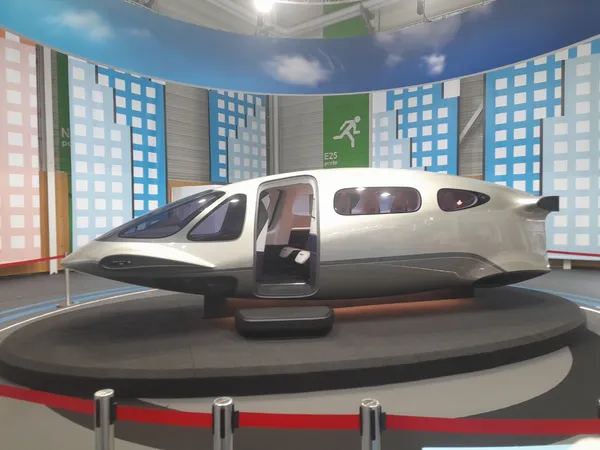
Advanced air mobility is moving from concept to planning across Oklahoma
Electric vertical takeoff and landing aircraft—often described as “flying taxis”—and expanded drone delivery services could become more visible in Oklahoma as state agencies and federal aviation officials build out the groundwork for what the industry calls advanced air mobility (AAM). The near-term shift is less about passenger flights beginning immediately and more about establishing airspace management, testing capacity, and landing infrastructure that would be required before routine operations can scale.
State strategy centers on testing sites, airspace tools, and future vertiports
Oklahoma’s aerospace officials have set a statewide objective to attract AAM testing, development, and eventual commercial operations. A key step came with a contract executed on February 5, 2025, for the state’s first investment in an airspace management system and an automatic detect-and-avoid solution. The project is tied to operations at the Oklahoma Air & Space Port near Burns Flat and is intended to support drone flights as well as emerging AAM activity, including beyond-visual-line-of-sight testing tied to next-generation unmanned aircraft systems.
Oklahoma law also assigns a coordinating role to the Oklahoma Department of Aerospace and Aeronautics, designating it as the state “clearinghouse” for unmanned aircraft systems and advanced air mobility, with responsibilities that include supporting safe integration and associated infrastructure planning.
FAA role: definitions, standards, and a federal facility in Oklahoma City
Federal rules remain central because AAM aircraft and drones operate in the National Airspace System. The Federal Aviation Administration uses AAM as an umbrella term for aircraft that are typically highly automated, electrically powered, and capable of vertical takeoff and landing. The FAA also maintains guidance and planning around “vertiports,” the ground facilities envisioned for takeoff and landing operations that may be co-located with existing heliports or airports.
Oklahoma City hosts the FAA’s Mike Monroney Aeronautical Center, a major FAA facility that supports aviation functions nationwide. State strategy documents and public announcements have highlighted work connected to AAM capability at this location, reflecting Oklahoma’s interest in positioning federal and state assets to support testing and evaluation of emerging aircraft types and operational concepts.
What residents would likely notice first
Early public-facing signs are expected to concentrate around controlled test environments and airport-adjacent facilities rather than widespread citywide service. The most plausible initial activity includes expanded drone operations for logistics and evaluation flights for new aircraft—steps that typically precede any passenger-carrying service.
- More structured drone testing activity, including beyond-visual-line-of-sight demonstrations in designated corridors or test ranges
- Planning and construction work related to vertiport-style pads, staging areas, and supporting power and communications systems
- Coordination efforts between state agencies, airports, and local governments on ground safety, noise planning, and traffic integration
Key constraints remain: certification and operating approvals, airspace integration, and ground infrastructure readiness.
Timeline: investment planning versus commercial service
Public planning in Oklahoma describes multi-year development rather than immediate statewide rollout. While the technology sector continues to pursue commercial air-taxi service in select U.S. markets, Oklahoma’s current emphasis is on becoming a testing and infrastructure hub—work that can proceed before any routine passenger rides begin. In practical terms, the state’s approach suggests residents may see incremental increases in demonstration and test activity first, with broader services dependent on federal approvals and infrastructure buildout.