Inside Holdenville’s Allen Gamble Correctional Center: Violence history, state takeover, and ongoing staffing strain
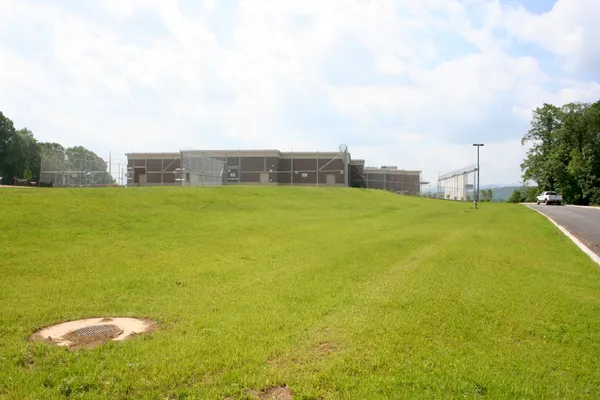
A prison with a long record of serious violence
The medium-security men’s prison outside Holdenville—formerly known as the Davis Correctional Facility and now the Allen Gamble Correctional Center—has repeatedly drawn scrutiny for deadly assaults and chronic instability. Over the past decade, public records, court cases and state documentation have mapped a pattern of stabbings, inmate homicides and staff safety risks that has made the facility a focal point in Oklahoma’s broader corrections debate.
The prison, opened in the mid-1990s with a capacity of roughly 1,600 men, operated for years under a private contractor before Oklahoma moved to bring it under direct state management. The name change to Allen Gamble Correctional Center took effect on October 1, 2023, as part of an effort to honor Sgt. Joe Allen Gamble Jr., a correctional officer killed in the line of duty in 2000 at a different Oklahoma prison.
State takeover followed a period of understaffing and escalating incidents
In 2022, emergency response data and contemporaneous reporting from Oklahoma outlets documented a sharp increase in stabbings at the Holdenville prison, including fatal attacks. That summer, a correctional officer, Alan Jay Hershberger, died after being attacked by an inmate with a homemade weapon, underscoring concerns about contraband, supervision gaps and the ability to respond quickly to violence inside housing units.
When the Oklahoma Department of Corrections assumed control in October 2023, staffing remained a central challenge. Public accounts of the transition described a drop in the number of correctional officers on site around the time of the takeover, compounded by hiring and background-check hurdles. Within days of the renaming ceremony in early October 2023, an officer was stabbed at the facility—an incident that reinforced the stakes of recruitment and retention in a high-risk setting.
How violence and staffing intersect in day-to-day operations
Incidents described in staff narratives and dispatch recordings have illustrated how staffing shortages can affect safety. One case involved an injured prisoner and a lack of immediately available staff, prompting repeated emergency calls from inside the prison. The episode added detail to a broader operational reality: when posts go unfilled, supervision and response times can erode in an environment where assaults can unfold within seconds.
- The facility houses medium-security offenders, including individuals with histories of violence.
- Reports have described repeated use of improvised weapons in assaults.
- Staffing levels and staff deployment can directly shape response capability during fights and medical emergencies.
Accountability and transparency disputes
Separate litigation and records disputes in 2024–2025 highlighted continuing tension over public access to incident documentation involving deaths and serious violence in Oklahoma prisons, including at Holdenville. In at least one widely reported case, an autopsy and subsequent reporting described the death of an incarcerated man at the facility in late 2024, intensifying questions about what information should be released and when.
The Holdenville prison’s recent history has become a case study in how staffing, transparency and violence can converge inside Oklahoma’s correctional system.
Programs alongside security pressures
Even as safety concerns persist, the facility has hosted structured programming, including long-running vocational and service initiatives such as a dog-training program that pairs incarcerated participants with shelter animals. Faith-based programming has also expanded to Holdenville in recent years. These efforts exist alongside, rather than instead of, the core operational challenge that state leaders and watchdogs continue to emphasize: maintaining adequate staffing and control in a prison with a documented record of serious assaults.