Oklahoma City Council meets amid concerns over proposed ICE processing center in southwest OKC warehouse
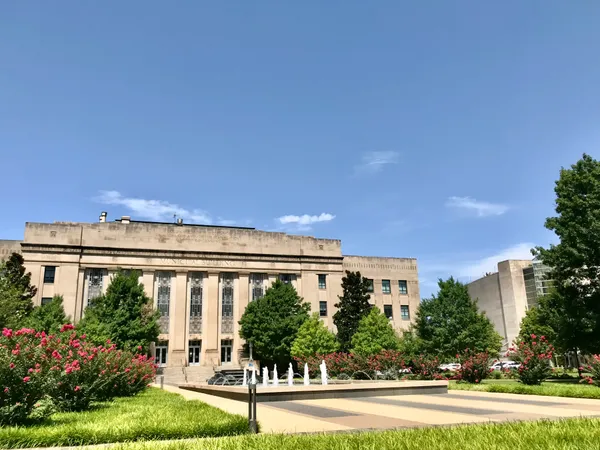
Council discussion follows federal notice describing plans for a large-scale, short-term detention and processing site
The Oklahoma City Council is set to address resident concerns Tuesday, Jan. 27, about a planned federal immigration detention processing facility proposed for a warehouse in southwest Oklahoma City. The project centers on a property at 2800 S. Council Road, a nearly 27-acre site that federal officials have described as suitable for conversion into a high-capacity processing center.
The proposal came to the City of Oklahoma City through a federal letter dated Dec. 23, 2025. The correspondence stated the U.S. Department of Homeland Security intends to purchase and occupy the warehouse to establish a “new Oklahoma City processing center” for use by U.S. Immigration and Customs Enforcement. The project description referenced security and operational features including a guard shack, fencing, cafeterias, holding and processing spaces, and health care spaces.
What is proposed at 2800 S. Council Road
The facility is described as a processing center intended for temporary custody, screening and administrative processing. The plan outlined in federal communications to the city anticipates renovations to the existing warehouse and related site improvements. Reporting based on the federal letter and city briefings has described a potential capacity ranging from 500 to 1,500 people held at a time for initial detention processing before transfer or release.
Community concerns have intensified because of the site’s proximity to neighborhoods and schools. The warehouse is in the Western Heights area; earlier local reporting placed it within walking distance of a nearby intermediate school and a short drive from Western Heights High School.
City role and limits of local authority
City officials have said the federal notice was triggered by a process focused on whether the project would affect historic property. The letter stated the federal government determined the project does not impact historic property. Under that framework, city officials have indicated the city cannot overturn the federal determination, but can provide feedback.
The city has also acknowledged that federal projects may proceed without typical local approvals when operated on federally owned or leased property, reflecting long-standing constitutional and legal principles governing conflicts between federal action and local regulation. Even so, city staff have said they are preparing a response urging federal authorities to pursue additional city approvals beyond the narrow historic-property review, emphasizing that detention-facility siting is normally subject to a public process for private development.
Questions that remain unresolved
- Whether the federal government will ultimately purchase or lease the building, and whether an agreement has already been finalized.
- The final operating capacity and layout once renovations are complete.
- What opportunities, if any, will exist for ongoing community input beyond written feedback and public meetings.
City leaders have publicly emphasized that land-use decisions are typically handled through local public processes, while recognizing the constraints that may apply to federal facilities.
The Jan. 27 council meeting is scheduled to begin at 8:30 a.m. at City Council Chamber, 200 N. Walker Ave., 3rd Floor.