Oklahoma Court of Criminal Appeals sets new verification requirement for generative AI in legal filings
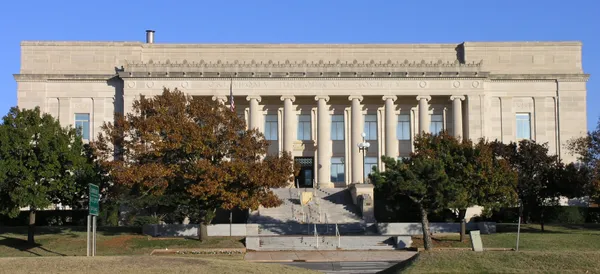
A new appellate rule targets inaccurate AI-generated citations and statements in criminal cases
The Oklahoma Court of Criminal Appeals, the state’s highest court for criminal matters, has adopted a new rule governing the use of generative artificial intelligence in documents filed with the court. The change was adopted Wednesday, Feb. 18, 2026, and is aimed at reducing the risk that AI-produced errors—particularly fabricated or misquoted legal citations—enter the appellate record.
The rule applies to filings made in the Court of Criminal Appeals. It does not automatically extend to the Oklahoma Supreme Court, the Oklahoma Court of Civil Appeals, or county district courts, each of which maintains its own procedural framework for filings and practice.
How the rule works in practice
Under the new requirement, the responsibility for accuracy remains with the person who submits the filing. When generative AI is used to produce or modify any part of a document filed with the court, the party or counsel must ensure that the AI-influenced portions have been verified as accurate by a person responsible for the document.
The rule reflects a central feature of appellate litigation: judges rely on parties to provide correct citations to binding and persuasive authority, and accurate quotations from the record and legal sources. Inaccurate citations can slow proceedings, burden court staff and opposing parties, and complicate the court’s review of claims on appeal.
Potential consequences for inaccurate AI-assisted filings
The Court of Criminal Appeals’ rule outlines sanctions that may be imposed when filings contain inaccuracies tied to insufficient verification. Sanctions described by the court can include striking a document from the record, contempt findings, and limiting or forfeiting the ability to pursue certain issues on appeal.
The rule is framed as an enforcement mechanism rather than a ban on AI use. It preserves the ability to use technology while emphasizing that attorneys and self-represented litigants remain accountable for what they submit.
Why courts are tightening standards
Courts nationally have faced a growing number of filings containing nonexistent case citations and other errors associated with unverified AI outputs. Federal judges have issued sanctions in multiple jurisdictions after discovering fabricated authorities in briefs, and appellate courts have addressed the issue when unreliable citations disrupt case review.
In Oklahoma, the issue has surfaced in high-profile litigation, including disputes in which one side alleged that filings contained invented or inaccurate citations and other statements. In separate federal proceedings in the state, judges have imposed monetary sanctions after determining that AI-assisted work product included fabricated citations.
What changes for Oklahoma practitioners
AI-assisted drafting is not prohibited, but it must be checked by a responsible person before filing.
Verification expectations focus on accuracy of citations, quotations, and other factual or legal assertions.
Sanctions are explicitly tied to inaccurate filings and can affect the status of the document and the scope of appellate arguments.
In practical terms, the new rule codifies a simple standard for appellate practice: technology may assist in preparing filings, but accuracy remains a human obligation.