Oklahoma forensic artist Harvey Pratt, known for facial reconstructions and national memorial design, dies at 84
A career that bridged criminal investigation, forensic innovation and Native public art
Harvey Phillip Pratt, an Oklahoma-based forensic artist whose work helped investigators identify suspects and victims in major cases over decades, died Dec. 31, 2025, in Guthrie. He was 84. His family and public statements following his death described the cause as stomach cancer.
Born April 13, 1941, in El Reno, Pratt built a career that blended law enforcement and visual art. He served in the U.S. Marine Corps in the early 1960s before entering police work and, later, joining the Oklahoma State Bureau of Investigation in 1972. Over time, he became widely sought after for the accuracy of his forensic drawings and for expanding the toolkit of forensic art beyond traditional composite sketches.
Work at OSBI and techniques used nationwide
Pratt spent much of a 50-year law-enforcement career at OSBI, where he advanced into leadership roles and later continued work as a specialized forensic artist. Colleagues credited him with producing thousands of investigative drawings and reconstructions during his career, used to generate leads, support identification efforts and assist agencies outside Oklahoma.
His contributions included multiple approaches to depicting faces when traditional methods were limited by injury, decomposition or missing-person timelines. Among them were:
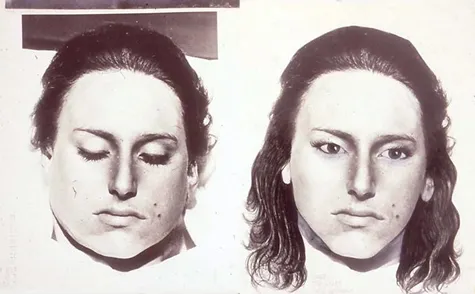
- Three-dimensional facial reconstructions informed by skull anatomy to approximate a victim’s appearance for public identification.
- Postmortem image enhancement techniques intended to restore a recognizable likeness by reducing visible trauma in reference photographs.
- Age progression work to update the likely appearance of long-missing individuals.
Over the years, Pratt’s name became associated with investigations that drew national attention, including the 1995 Oklahoma City bombing, the Green River Killer case and other serial-murder investigations, as well as major Oklahoma cases from earlier decades.
Native identity, public service and recognition
Pratt was a citizen of the Cheyenne and Arapaho Tribes and was recognized as a Southern Cheyenne peace chief. Outside forensic work, he maintained an extensive studio practice in painting and sculpture and participated in major Native arts events, including Oklahoma’s Red Earth Festival.
After retiring from OSBI in 2017, Pratt’s public-facing design work gained national visibility through his role as designer of the National Native American Veterans Memorial in Washington, D.C., which opened in 2020. In 2021, he was inducted into the Oklahoma Hall of Fame.
Pratt’s legacy spans both public safety and cultural institutions, with work preserved in public collections and law-enforcement archives.
He is survived by his wife, Gina, and four children.