Oklahoma House defeats HB 3127, proposed to broaden employer zero-tolerance rules for medical marijuana
Close floor vote ends proposal to expand employer discretion
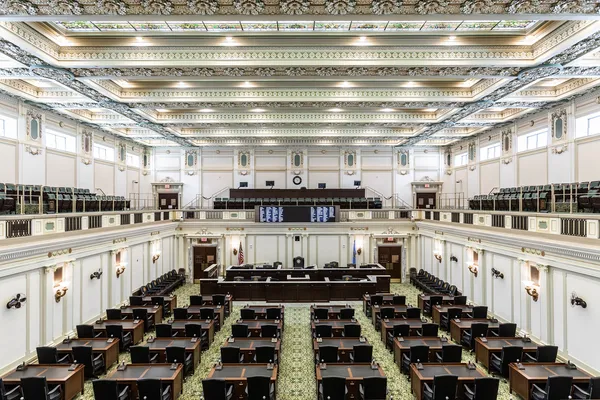
The Oklahoma House of Representatives voted down House Bill 3127 on March 12, 2026, rejecting a measure that would have expanded employer authority to take adverse employment actions based on marijuana test results. The bill failed on third reading, 47-46, with a notice filed to reconsider the vote the same day.
HB 3127 was authored by Rep. Kevin West, R-Moore, with Sen. Jerry Alvord, R, listed as principal Senate author. The measure advanced through House committees earlier in the session, including a “do pass” recommendation in the House Business Committee on Feb. 10 and approval by the Commerce and Economic Development Oversight Committee on March 5.
What the bill sought to change in Oklahoma’s medical marijuana employment rules
The proposal targeted Oklahoma’s statutory framework governing medical marijuana patients and caregivers, focusing on workplace drug policies and employment decisions. Current state law contains provisions limiting when employers may refuse to hire, discipline, or discharge a person solely because the person is a medical marijuana license holder or because of a positive marijuana test, with exceptions that include on-the-job use or impairment and positions deemed “safety-sensitive.”
As introduced, HB 3127 proposed shifting these employer restrictions by emphasizing a discretionary “zero-tolerance” approach. The bill summary stated it would clarify that nothing in Oklahoma’s medical marijuana law requires an employer to permit or accommodate the use, possession, sale, transfer, or being under the influence of medical marijuana in the workplace or while performing job duties. It also addressed the use of drug and alcohol testing policies and described circumstances in which employers could take adverse action when consistent with a written zero-tolerance policy.
- It proposed language reinforcing that employers are not required to accommodate medical marijuana use or impairment at work.
- It sought to protect an employer’s ability to implement and enforce written zero-tolerance drug and alcohol testing policies.
- It addressed adverse actions tied to a positive marijuana test when aligned with an employer’s written policy.
- The introduced text set an effective date of Nov. 1, 2026.
Why the bill mattered: safety-sensitive jobs and drug testing standards
Workplace marijuana rules have remained a recurring point of conflict in states with medical marijuana programs, particularly because many drug tests detect cannabis metabolites rather than real-time impairment. Oklahoma law includes a definition of “safety-sensitive position” and connects that concept to when a positive test can be used as a basis for employment decisions, creating higher stakes for both employers managing risk and employees seeking protection for lawful medical use.
The bill’s legislative debate centered on how broadly employers should be able to apply drug-test outcomes in hiring and discipline, and how those decisions interact with protections tied to medical marijuana licensure.
What happens next
With the House rejecting HB 3127 on March 12, the proposal does not advance to the Senate in its current form. The notice to reconsider left open a procedural path for the House to revisit the vote, but no subsequent outcome was recorded in the bill’s official history at the time of the failed third-reading vote.