Oklahoma remains without a state forester months after Goeller’s firing, as agencies prepare for wildfire season
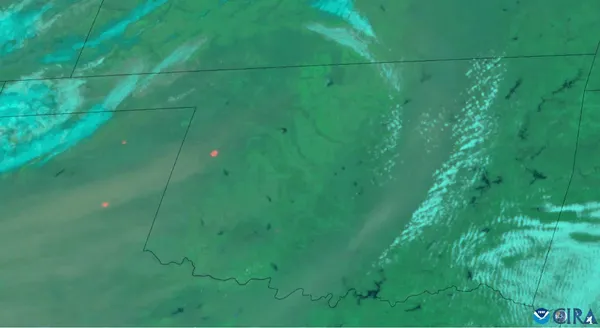
A leadership vacancy that followed Oklahoma’s March 2025 wildfire outbreak
Oklahoma has continued operating without a confirmed state forester months after Gov. Kevin Stitt forced out Mark Goeller, the longtime director of Oklahoma Forestry Services (OFS), following the March 2025 wildfire outbreak that began March 14.
Goeller, who had led OFS as state forester since 2018 after decades of service in state wildfire and forestry work, left the job after the governor criticized the agency’s performance during the outbreak. State officials reported that the March fires burned more than 170,000 acres, killed four people, injured hundreds, and destroyed hundreds of homes across Oklahoma.
How the state is handling the vacancy
OFS is a division of the Oklahoma Department of Agriculture, Food and Forestry (ODAFF). The agency has continued day-to-day operations while the search for a permanent state forester proceeds. ODAFF has stated the position has been posted, interviews have taken place, and no candidate has been named.
ODAFF’s employment listings have continued to include “State Forester” among open positions, alongside multiple field and support roles within the forestry division, underscoring that the vacancy has remained unresolved well after the leadership change.
Competing views at the Capitol and within public safety circles
The governor publicly questioned the value of maintaining a state forestry agency after the March fires, suggesting the state could eliminate the department and redirect funds. Legislative leaders responded by emphasizing that OFS is established in state law and funded through the legislative process.
Following Goeller’s departure, some elected officials and fire-service voices argued that the state benefits from centralized wildfire coordination and experienced leadership in a state forester role. Others aligned with the governor’s position that the March response revealed shortcomings requiring major operational changes.
After-action review and an executive working group
In early April 2025, the governor created a Wildland Fire Response Working Group, co-led by the Secretary of Public Safety and the Secretary of Agriculture. The group was directed to convene within 30 days and deliver recommendations within six months aimed at improving wildfire mitigation, suppression, and recovery capabilities statewide.
Later in April 2025, the working group delivered an initial report describing problems that included fragmented interagency communication, radio interoperability gaps, delays in deployment to high-need areas, and staffing shortages among rural volunteer firefighters. The preliminary reform concepts discussed publicly included changes to dispatch systems and revisions to how protection areas and resources are organized during major incidents.
Key questions still open as Oklahoma approaches higher-risk periods
- When a permanent state forester will be appointed and what qualifications the state prioritizes for the role.
- Whether operational recommendations from the working group translate into policy changes, funding shifts, or statutory updates.
- How Oklahoma balances local firefighting capacity with statewide coordination during periods of extreme fire weather.
Oklahoma’s wildfire response structure is undergoing scrutiny and potential redesign while the state forester position remains unfilled, leaving long-term leadership questions unresolved even as preparedness efforts continue.