Oklahoma Supreme Court rejects lawmakers’ bid to block driver-license data sharing with national verification system
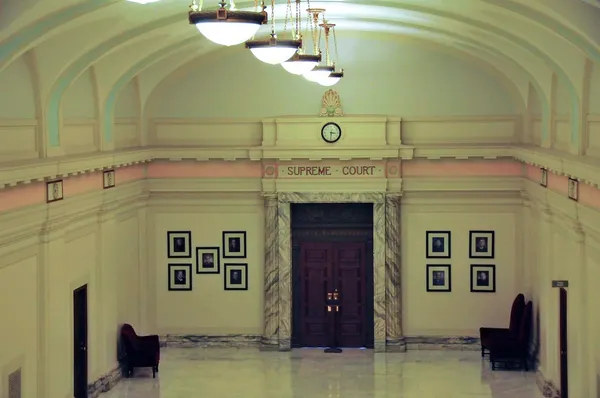
High court declines emergency action in dispute over Service Oklahoma’s participation in interstate license checks
The Oklahoma Supreme Court has rejected an emergency request from 34 state lawmakers seeking to stop Service Oklahoma from transmitting certain driver license and identification records to an interstate verification system used by motor vehicle agencies around the country.
In an order filed Feb. 9, 2026, the court denied the lawmakers’ application to assume original jurisdiction and also denied their request for an emergency stay and temporary injunction. The case was brought by Sen. Kendal Sacchieri, R-Blanchard, and other legislators against Service Oklahoma and its executive director, Jay Doyle.
The petition asked the court to temporarily prohibit any transmission of records maintained by Service Oklahoma to the American Association of Motor Vehicle Administrators’ State-to-State Verification Service, commonly known as S2S, and to declare that the agency lacks statutory authority to participate without additional legislative authorization.
What the court’s order says
The Supreme Court order describes a legal framework that generally requires confidentiality for personal information held in driver license and identification card records, but includes specific statutory exceptions. The court pointed to language in state law allowing release of personal information on a specific individual when requested in writing by “another state’s or country’s driver licensing agency,” provided the disclosure is consistent with the federal Driver’s Privacy Protection Act.
The order notes that the petitioners did not provide conflicting authority to overcome that exception, and it concludes the lawmakers did not meet the requirements for the high court to take up the matter directly on an emergency basis.
Vote breakdown and separate writings
The order reflects multiple positions among the justices. Chief Justice Dustin Rowe and Justices James Winchester, Tom Colbert Edmondson, Noma Gurich and Dana Kuehn concurred, with Kuehn writing separately to concur in the result. Justices Douglas Combs and James Jett dissented from the denial of relief, and Justice John M. Kane IV dissented in a separate writing.
Justice Kane wrote that he would grant emergency relief and remand the matter to district court for prompt consideration, including the requested temporary injunction.
What the system is and why it matters
The State-to-State Verification Service is designed to let participating jurisdictions electronically check whether an applicant already holds a driver license or identification card in another state and to support efforts to limit individuals to a single credential at a time. The platform supporting S2S is known as State Pointer Exchange Services (SPEXS).
Key takeaways for Oklahomans
The Supreme Court’s Feb. 9, 2026 order leaves Service Oklahoma free to proceed without a court-ordered pause.
The dispute centers on statutory authority and confidentiality rules for personal information in driver licensing records, including how state-law exceptions interact with the federal Driver’s Privacy Protection Act.
Separate opinions indicate at least some justices viewed district-court fact development as a better venue for evaluating the lawmakers’ claims.
Service Oklahoma is the state agency responsible for issuing driver’s licenses and registering vehicles. The court’s order addresses only the emergency request and original-jurisdiction posture, not a full trial-level record on the broader policy questions raised by the lawmakers’ filing.