Phase III trial with OU participation links proton therapy to higher five-year survival in oropharyngeal cancer
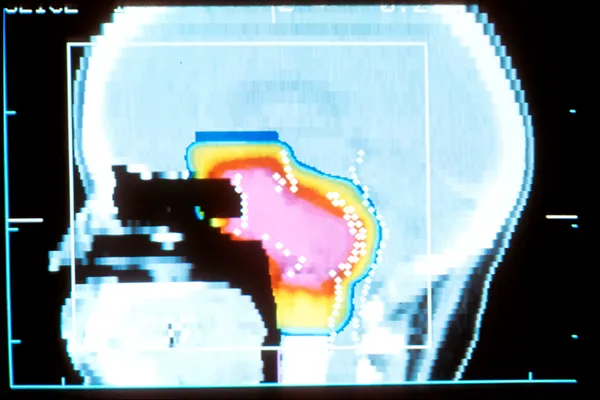
Largest randomized U.S. comparison reports survival and toxicity differences between proton and photon radiation
A multi-center Phase III clinical trial that included patients treated through the University of Oklahoma’s cancer program found that proton therapy was associated with higher five-year overall survival than conventional photon-based radiation for advanced oropharyngeal cancer, a common head and neck cancer arising in the tonsils and base of tongue.
The trial, published in The Lancet on Dec. 11, 2025, compared intensity-modulated proton therapy (IMPT) with intensity-modulated radiation therapy using photons (IMRT). Researchers enrolled 440 patients across 21 U.S. institutions and followed participants long enough to report five-year outcomes.
What the trial found
Overall survival at five years was 90.9% for patients assigned to proton therapy and 81.0% for those assigned to photon therapy.
The study’s primary goal was to test whether proton therapy was not worse than photon therapy for cancer control, measured by progression-free survival. Progression-free survival was similar between groups, with reported five-year rates of about 81.3% for proton therapy and 76.2% for photon therapy.
Several treatment-related complications were less common among patients treated with protons, including swallowing difficulty, feeding-tube dependence and dry mouth. Measures of immune suppression, including severe lymphopenia, were also reported less frequently in the proton group.
Why the results matter for head and neck cancer care
Oropharyngeal tumors often sit near organs and structures involved in swallowing, salivation, speech and breathing. Proton therapy is designed to deposit radiation energy within a targeted depth and reduce exit dose beyond the tumor, while photon radiation typically passes through the body, exposing a wider volume of normal tissue.
Investigators reported that cancer recurrence rates were broadly comparable between study arms, raising the possibility that differences in survival may be related to treatment toxicity and its downstream effects rather than differences in tumor control.
In participating centers, clinicians reported that patients treated with proton therapy experienced fewer severe side effects during and after treatment while maintaining similar cancer control.
Role of OU and what comes next
OU clinicians participated as part of the 21-site network that enrolled patients, adding Oklahoma-based experience to the largest randomized comparison to date between modern proton and photon techniques in this disease setting.
The findings are likely to influence referral patterns and insurance coverage discussions, because proton therapy has historically been limited by availability and cost. The study also frames future questions, including which patients benefit most, how to expand access, and whether similar survival and toxicity patterns apply to other head and neck cancer sites treated with radiation.