Stitt’s 2026 State of the State highlights medical marijuana rollback vote, Medicaid changes, expanded school choice
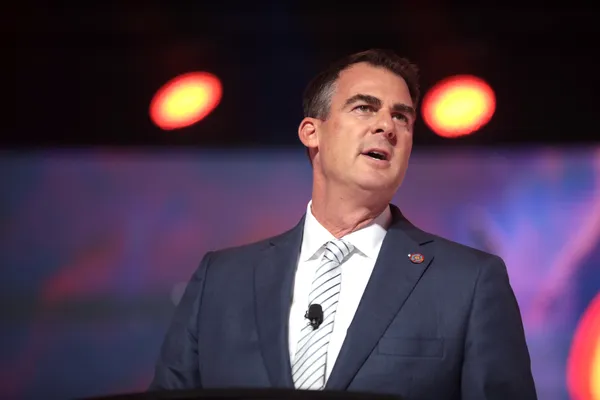
Address sets agenda for 2026 session with ballot questions and major policy fights
Gov. Kevin Stitt used his 2026 State of the State address on Feb. 2, 2026, to outline an agenda built around limiting state spending growth, reshaping public benefits, expanding private-school tax credits, and revisiting Oklahoma’s medical marijuana system. The proposals arrive as lawmakers weigh priorities in a session expected to be dominated by budget pressures and election-year politics, with the governor term-limited in 2026.
Marijuana: call for a new statewide vote on medical legalization
Stitt’s most sweeping public-safety pitch was a request that lawmakers put the state’s marijuana policy back before voters. He argued Oklahoma’s medical marijuana framework has enabled persistent illegal activity and said enforcement alone is insufficient. In his remarks, he pointed to the sheer number of dispensaries and described the industry as difficult to regulate, urging a return of the question to the ballot with the goal of shutting the system down.
The governor credited enforcement efforts by the Oklahoma Medical Marijuana Authority and the Oklahoma Bureau of Narcotics for pushing back on illegal operations, but framed his proposal as a structural reset rather than incremental regulation.
Medicaid and welfare programs: executive action and a push for voter-approved changes
Stitt placed Medicaid at the center of a broader “welfare-to-work” message, describing long-term cost growth as a major budget threat. He highlighted an executive order directing agencies to review and tighten administration of major benefit programs, including Medicaid and SNAP, with audits of error rates and fraud controls, efforts to address “benefit cliffs,” and development of incentives tied to employment, training, or education.
He also called on the Legislature to send a question to voters aimed at allowing adjustments to Oklahoma’s Medicaid expansion, describing the goal as preserving coverage for those most in need while adding stronger eligibility and work-related expectations.
School choice: remove or expand the cap on private-school tax credits
Stitt renewed his push to broaden the Parental Choice Tax Credit program, urging lawmakers to eliminate the program’s spending cap and make the credit available to any family seeking to use it. The current structure ties maximum per-student credit amounts to household income, with larger credits for lower-income families and smaller credits for higher-income households, while an annual statewide authorization limit constrains total participation.
In late January, Stitt also signed an executive order directing the creation of a statewide “School Choice Hub,” envisioned as a centralized digital portal intended to help families compare learning options and to support policymaking around education choice.
Other agenda items: spending limits, property taxes, and governance changes
A proposed state question to cap annual growth in recurring state spending, seeking to place a constitutional limit on budget expansion.
A proposed statewide vote to freeze property tax growth, presented as a response to rising valuations and tax burdens.
A call to change how Oklahoma selects its state superintendent, advocating a shift toward gubernatorial appointment rather than election.
The governor’s agenda relies heavily on voter-approved questions, setting up a session where lawmakers must decide which issues to advance to the ballot—and on what timeline.